

Exactly 34 years ago today, an explosion in the 4th reactor of the Chernobyl Nuclear Power Plant causes the biggest nuclear disaster in human history. Although the official death tool presented by the Soviet Government at the time was 31 souls, now we know that thousands of people lost their lives due to the radiation that spread around the globe.
I was not even born when the disaster occurred but I have heard about it from my parents, it is in the history books, I have watched movies about it. It has impacted life as we know it today. The thing that amazes me the most is how secretive the Soviets were about the accident and how on May 1 manifestations were held all around the Union. In my country (Bulgaria) thousands of people were celebrating Labor Day out in the radioactive rain. At the time, my mother was a tour guide and she told me that she understood that something was wrong from the Greek tourists that were fleeing Bulgaria as fast as they could. Greece was not behind the Iron Curtain and there was information about the increased radiation that was hidden from the Soviet population by their own leaders. For me Chernobyl represents an era that is gone and we may only hope never to return.
That said, this time period still fascinates me. I was interested in the Chernobyl disaster long before the HBO show with the same name was even in the plans of making. That is why, when the opportunity to visit the place back in 2018 presented itself, I took it without the slightest hesitation. And this turned out to be one of the most eerie and extraordinary experiences in my life.
As my impressions of the Exclusion Zone are many and some planing before the trip must be considered, I have split the account of my experience into three parts:
- Part 1: Things to Know before You Go and Entering the Exclusion Zone;
- Part 2: The City of Chernobyl and The Abandoned Soviet Duga-3 Radar ( link here);
- Part 3: The Chernobyl Nuclear Power Plant and The City of Pripyat (link here).
Things to Know before You Go
In October of 2018 I was visiting Kiev, the Ukrainian capital, for work and since it is only about 140 km away from Chernobyl, I decided to make a research and visit it.
It turned out there were a lot of options available for tourists. Even then, when the TV show “Chernobyl” have not yet made the Zone a popular destination, there was a number of fans of Adventure tourism willing to visit it.
I was traveling on a budget so I chose the cheapest possible tour that popped up on my Google Search – Chernobyl Exclusive Tours. This company still offers its services today and, although there were some flows, I would definitely recommend it.
There were two possible prices for the tour with almost every company I’ve checked. Let me explain. Since Chernobyl is located in the Exclusion Zone, everyone wishing to visit should have a permission to do so with his exact name and passport number on it. Therefore, in order to obtain one, you should contact a travel agency, which makes self-organized trips virtually impossible. The travel agency I chose had two price options – if you would like to visit in the next 2-3 days (option 1) or in a later period, for example in a week from the current date (option 2). Of course, the sooner the trip, the higher the price. For those, who wished to visit the next day, it was still possible but the price was about double.
Also, there were some extras to the trip you may wish to consider. Some companies are offering lunch in Chernobyl, protective gear, protective shoes, and a dosimeter for a small extra sum. I’ve booked the lunch which I did not liked at all. To be honest, only two people of our group of about 20, had chosen to buy the protective gear and they used it mainly for photo purposes. Only one person had rented the dosimeter and it was enough for the whole group to see the readings. That is why I would not recommend any of the extras.
In the day before the trip each participant had received an email stating that you should bring your passport (without it entrance to the Exclusion Zone would be refused) and wear long-sleeved clothes for protection from radiation. Another rule was not to eat outside and to refrain from touching any objects around.
Entering the Exclusion Zone
Our meeting point was at 07:00 a.m. at the office of the company. After careful check of each traveler’s documents, in 8 a.m. sharp, we were ready to begin our adventure.
We were organized into two gropes and each one was presented with their guide and a small 20-seat bus, that was supposed to be our ride for the day. I liked the fact we were not that many people as this gave us the opportunity to meet one another and to embark on this journey on a friendlier basis. As of the guide, he was nice enough, although he did not speak English too well. Still, we were able to understand him for the most part and he was trying really hard to be informative.
After a two-hour ride, we finally reached the Zone.
The Chernobyl Exclusion Zone is divided into two parts – the 30-kilometer zone and the 10-kilometer zone. Before entering each, you are required to present your permission along with your passport. This might take a while since there are numerous tourists visiting every day. The day I’ve visited, there were about 30 buses entering the zone.
The first thing on the agenda was an abandoned village just a few minutes away from the first check point. Here we were warned not to touch the little group of friendly homeless dogs, begging for food, as they might have been radioactive. After another reminder not to touch anything, our guide allowed us to take a stroll inside the village.
Let me just mention that I took this trip in the autumn and what I most explicitly remember about it is how stunningly beautiful the nature all around me looked. The eerie silence was calming and it seemed like with the absence of people the vegetation managed to reconquer its domain. With the red and golden coloring the majestic forest was just breathtaking and looked like the setting of a fairy tale.
There was no visible road between the buildings that were left. We were walking on a carpet made of leaves which gave a bit of a “Hensel and Gretel” vibe. Trees grew everywhere between the buildings that looked odd and strangely out of place.
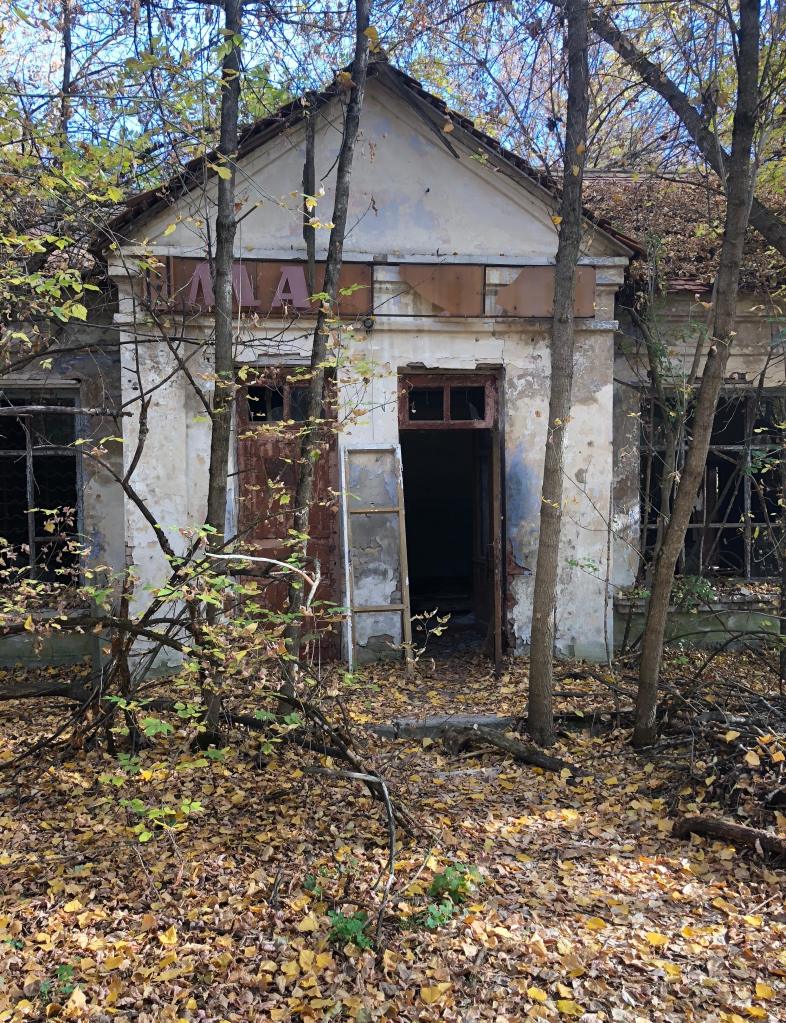
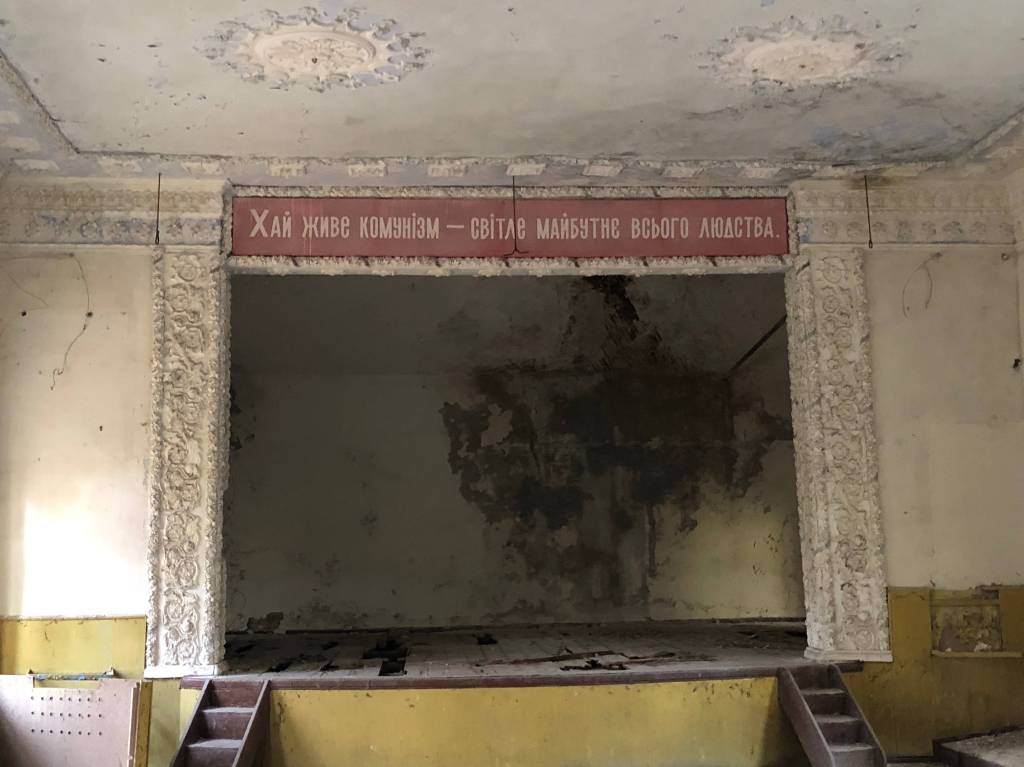
We saw the village shop and were allowed to enter the municipality building. No wander that after 30 years without humans, it was in crumbles. The floor had completely given up in some rooms but the slogan written above the stage in the main room still endured – “Long live Communism – the bright future of all mankind”.
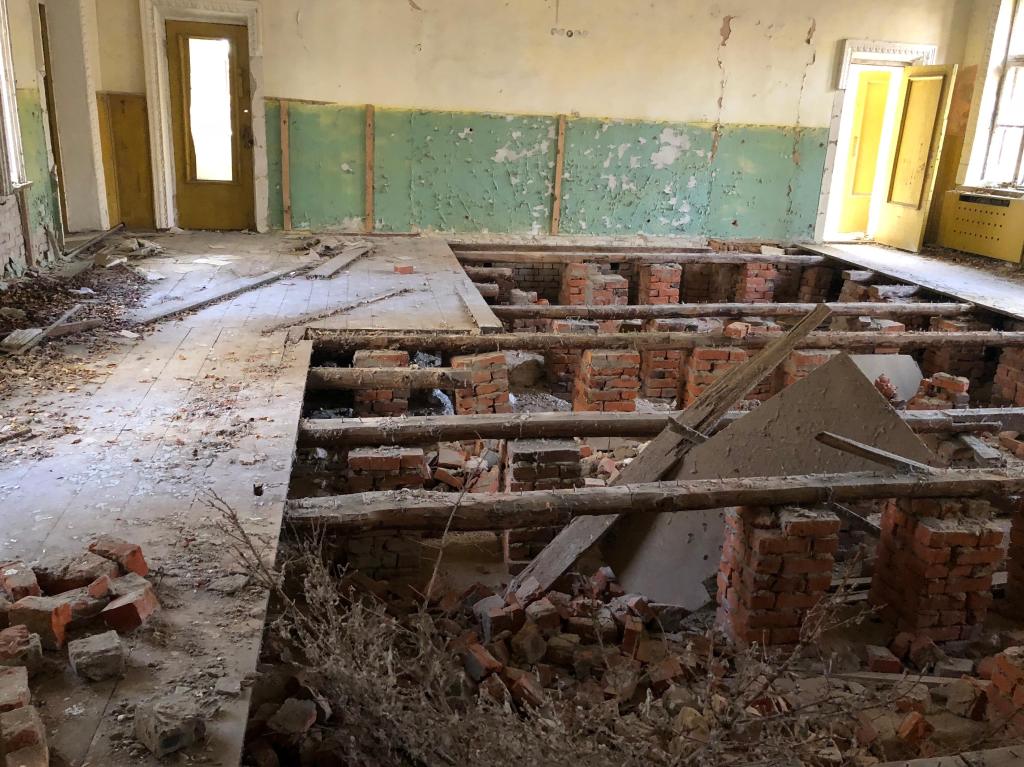
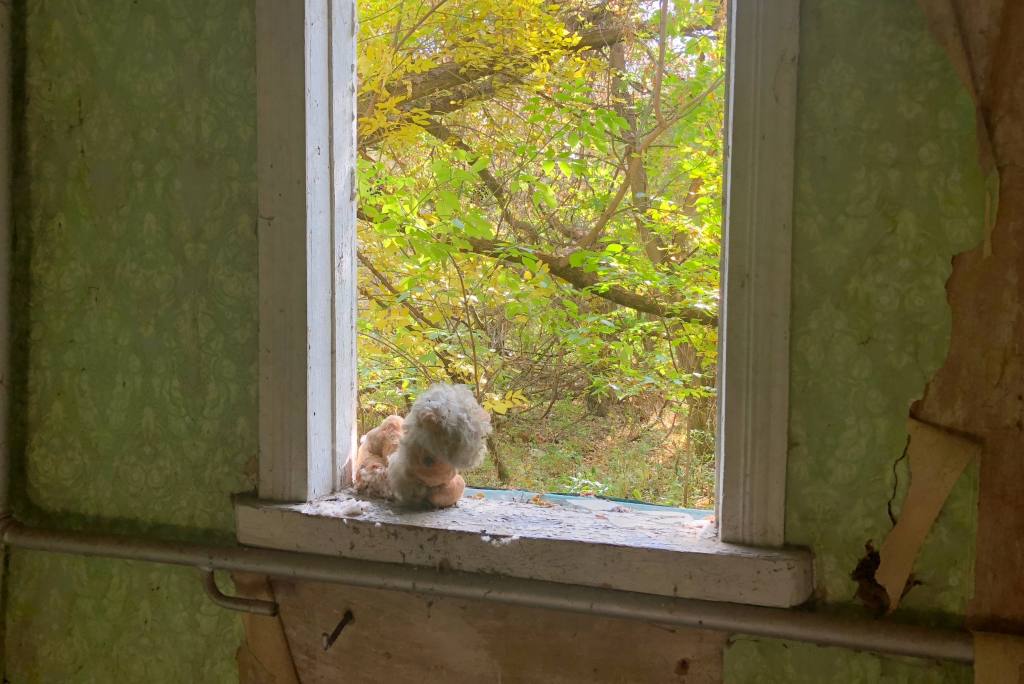
Before I’ve visited the Zone, I’d heard stories that the houses are exactly like people have left them – all their things still there, even newspapers from the day of the disaster laying around. Unfortunately, there is little to no truth to this myth. From what I saw, the houses were in rambles with people’s possessions thrown around the floors in disarray. As I learned later, the population of the Zone was evacuated a few days after the accident leaving everything they owned behind. The people were told they’d be allowed to return in a few days and retrieve their belongings. That never happened, and thieves roamed the area in the weeks after, stealing the radioactive valuables and selling them in the markets of Kiev and Minsk.

Outside of one of the houses, the remains of an old Lada could be seen. We were explained that this was everybody’s dream car at the time of the accident and families were saving months and even years to afford one. Now, it stayed there as an eerie reminder of how fast people were forced to evacuate, leaving even their most precious possessions behind.
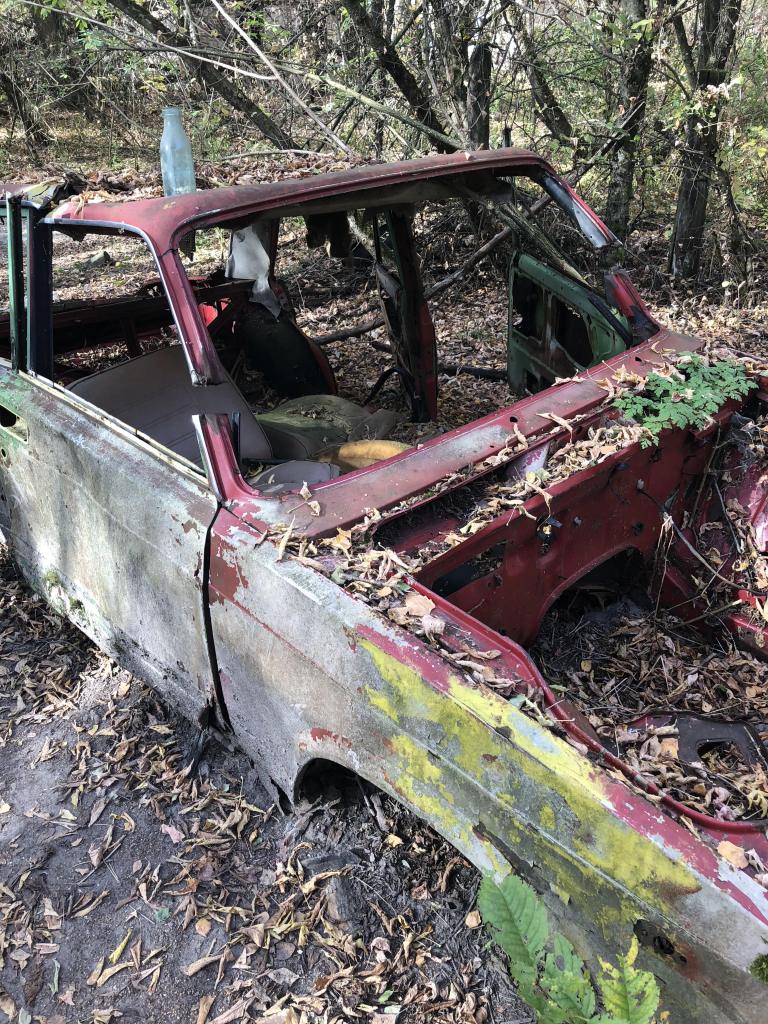
For me, those images were a rude reminder that I am not walking in a quite fairy-tale world but amongst the remains of human tragedy.
And this was just the beginning for our next step was Chernobyl itself…
Story continues here …
Photos: Personal Archive
 Confusion in Wonderland
[…] Important: If you want to read Chernobyl: A Trip into the Exclusion Zone Part 1, where you can check out Things to Know before You Go and Entering the Exclusion Zone, please click here. […]
LikeLike
[…] check out Things to Know before You Go and Entering the Exclusion Zone, please click here. If You want to read Chernobyl: A Trip into the Exclusion Zone Part 2, where you can check out The […]
LikeLike